


‹
›
‹
›
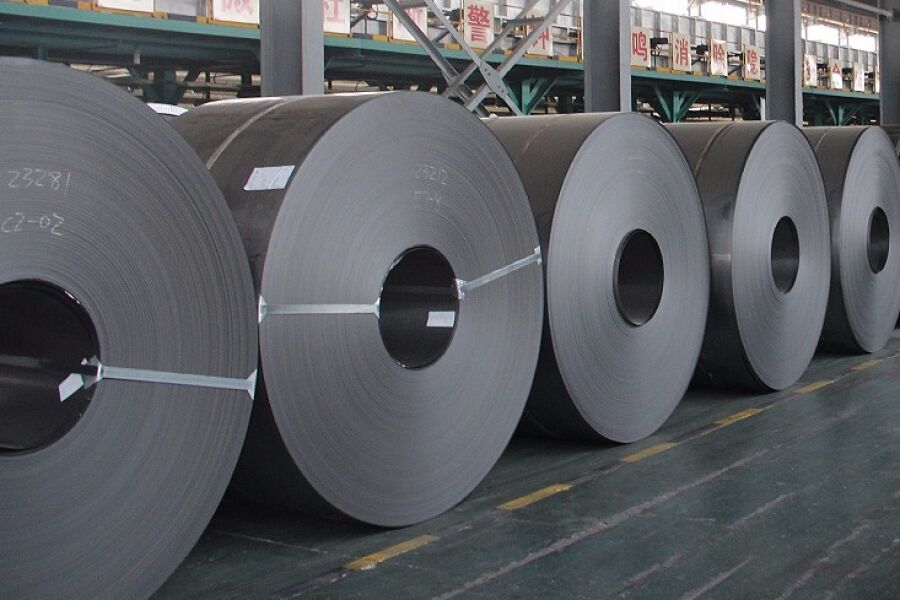
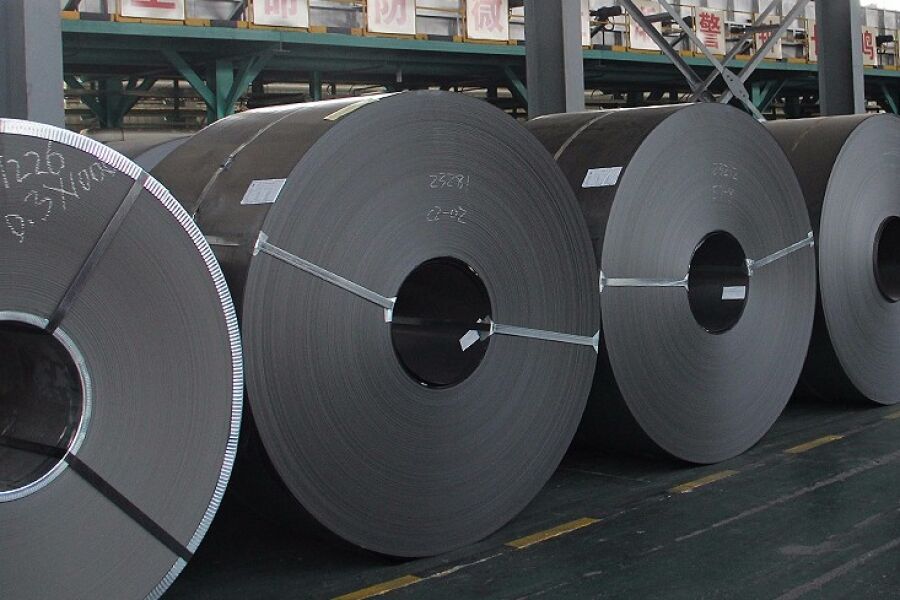
Cold rolling refers to rolling performed below the recrystallization temperature; in general practice, it is understood as rolling materials at room temperature.
Production Process
Since no heating is involved during the production process, the material is free from defects commonly found in hot-rolled products—such as pitting or iron oxide scale—resulting in superior surface quality and a high-quality finish. Furthermore, cold-rolled products offer high dimensional accuracy, with mechanical properties and microstructures tailored to meet specific functional requirements, such as electromagnetic characteristics or deep-drawability.
Specifications: Thickness ranges from 0.2 to 4 mm, width from 600 to 2,000 mm, and sheet length from 1,200 to 6,000 mm.
Grades: Q195A–Q235A, Q195AF–Q235AF, Q295A(B)–Q345A(B); SPCC, SPCD, SPCE, ST12–15; DC01–06.
Properties: Primarily composed of low-carbon steel grades, these materials are required to exhibit good cold-bending and welding characteristics, as well as specific stamping (press-forming) capabilities.
Applications
Cold-rolled sheets and strips have a wide range of applications, including automotive manufacturing, electrical appliances, railway rolling stock, aerospace, precision instrumentation, and the production of food cans.
"Cold-rolled thin steel sheet"—often referred to simply as "cold-rolled sheet" or "cold-rolled plate"—is a product derived from ordinary carbon structural steel. It is produced by taking hot-rolled carbon structural steel strips and subjecting them to further cold rolling until the thickness is reduced to less than 4 mm. Because the rolling occurs at room temperature, no iron oxide scale is formed; consequently, the material boasts excellent surface quality and high dimensional accuracy. Additionally, through subsequent annealing, its mechanical and processing properties surpass those of hot-rolled thin sheets. In many sectors—most notably in the manufacturing of home appliances—cold-rolled sheets have increasingly replaced hot-rolled thin sheets. Applicable grades: Q195, Q215, Q235, Q275; SPCC (Japanese grade); ST12 (German grade).
Designation system for general structural steel in Japan (JIS standards)
1. Japanese designations for general structural steel typically consist of three parts: the first part indicates the material (e.g., "S" for Steel, "F" for Ferrum/iron); the second part denotes the shape, type, or application (e.g., "P" for Plate, "T" for Tube, "K" for *Kogu*/tool); and the third part consists of a characteristic numerical value, generally representing the minimum tensile strength. For example, in "SS400," the first "S" stands for "Steel," the second "S" stands for "Structure," and "400" represents a minimum tensile strength of 400 MPa; the designation collectively refers to general structural steel with a tensile strength of 400 MPa.
2. SPHC: "S" stands for Steel, "P" for Plate, "H" for Heat (hot-rolled), and "C" for Commercial; this designation refers to general-purpose hot-rolled steel sheets and strips.
3. SPHD: Refers to hot-rolled steel sheets and strips intended for stamping/pressing.
4. SPHE: Refers to hot-rolled steel sheets and strips intended for deep drawing.
5. SPCC: Refers to general-purpose cold-rolled carbon steel sheets and strips. It is equivalent to the Chinese grades Q195–Q215A and the German grade ST12. The third letter, "C," stands for "Cold" (cold-rolled). If mechanical properties must be guaranteed, a "T" is added to the end of the designation (e.g., SPCCT).
6. SPCD: Refers to cold-rolled carbon steel sheets and strips intended for stamping/pressing. It is equivalent to the Chinese high-quality carbon structural steel grade 08AL (13237) and the German grade ST13. 7. SPCE — Denotes cold-rolled carbon steel sheets and strips intended for deep drawing. It is equivalent to the Chinese 08AL (5213) deep-drawing steel and the German grade ST14. For grades subjected to aging treatment, an "N" is added to the end of the designation (e.g., SPCEN).
Temper/Condition Designations for Cold-Rolled Carbon Steel Sheets and Strips: "A" for annealed, "S" for standard temper, "8" for 1/8 hard, "4" for 1/4 hard, "2" for 1/2 hard, and "1" for full hard.
Surface Finish Designations: "D" for dull finish (matte), and "B" for bright finish. For example, SPCC-SD refers to cold-rolled carbon steel sheets for general use with a standard temper and a dull finish. Another example, SPCCT-SB, refers to cold-rolled carbon steel sheets with a standard temper and a bright finish, for which specific mechanical properties are guaranteed.
Symbols:
1. "Q" — The designation for the yield point (limit) of ordinary carbon structural steel; it is the first letter of the Chinese Pinyin word "qu" (meaning "yield"). The numbers 195, 215, 235, 255, and 275 represent the respective yield point (limit) values in megapascals (MPa, or N/mm²). Q235 steel is widely used because it offers an excellent balance of mechanical properties—including strength, plasticity, toughness, and weldability—making it well-suited for a broad range of general applications.
2. "S" stands for Steel, "P" for Plate, "C" for Cold-rolled, and the fourth character "C" for Commercial grade. 3. ST – Steel; 12 – Ordinary-grade cold-rolled thin steel sheet.
Designation: Dimensional accuracy — Dimensions — Standard for the type of steel sheet.
Cold-rolled steel sheet: Steel grade — Standard for technical specifications.
Example of designation: B-0.5×750×1500-GB708-88. For a steel sheet conforming to standard Q/BQB 402, with steel grade SPCC, heat-treated via annealing and temper rolling (S), featuring a dull (matte) surface finish (D) and FB-grade surface quality, with trimmed edges (EC) (or untrimmed, EM), a thickness of 0.5 mm (Class B accuracy), a width of 1000 mm (Class A accuracy), a length of 2000 mm (Class A accuracy), and a flatness precision of PF.A, the designation is: Steel Sheet EC Q/BQB 402-SPCC-SD-FB/(0.5×1000A×2000A-PF.A).
Cold-rolled steel sheet: Q225-GB912-89.
Major producers include: Baosteel, Angang (Ansteel), Bengang (Bensteel), Wugang (Wusteel), Hangang (Hansteel), Baogang (Baotou Steel), Tanggang (Tangsteel), Liangang (Liansteel), Jigang (Jinan Steel), etc.
Ordinary cold-rolled thin steel sheet: Produced by cold-rolling ordinary carbon structural steel or low-alloy structural steel. These sheets feature superior surface quality and excellent stamping performance. They are required to pass cold-bending and cupping tests; they are commonly used in industries such as automotive manufacturing and serve as raw material for coated steel sheets. High-quality cold-rolled steel sheets: This category primarily encompasses various types of high-quality cold-rolled steel sheets. Most common are those made from carbon structural steel—specifically, cold-rolled sheets intended for deep drawing, typically produced from high-quality low-carbon steel (grade 08Al). Based on surface quality, these sheets are classified into three groups—I, II, and III—representing "extra-high," "high," and "superior" surface finishes, respectively. According to their drawing (forming) capability, they are categorized into grades ZF, HF, and F (corresponding to applications involving complex, very complex, and moderately complex deep-drawn parts). Furthermore, based on allowable thickness tolerances, they are classified into two precision levels: A and B. These products are widely used in the automotive and tractor industries.
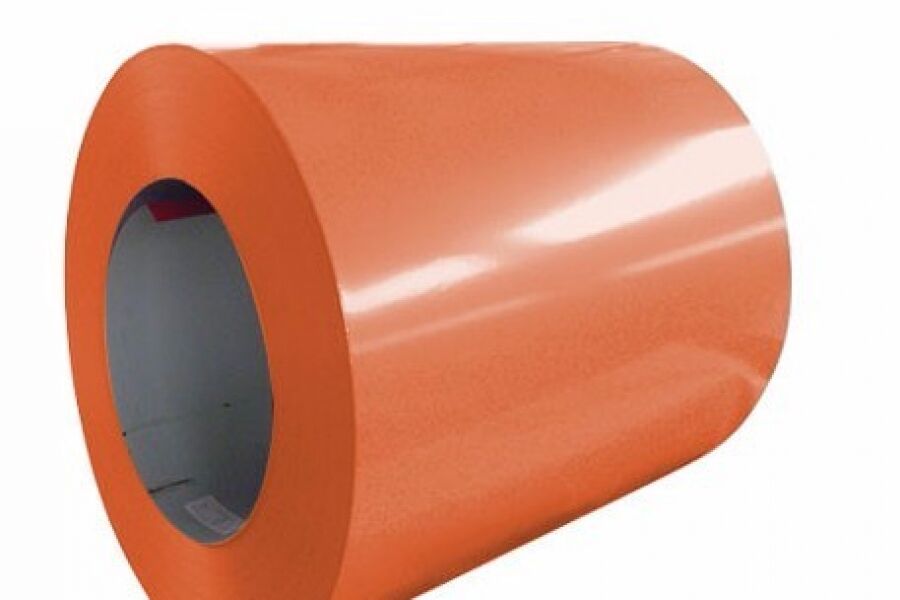
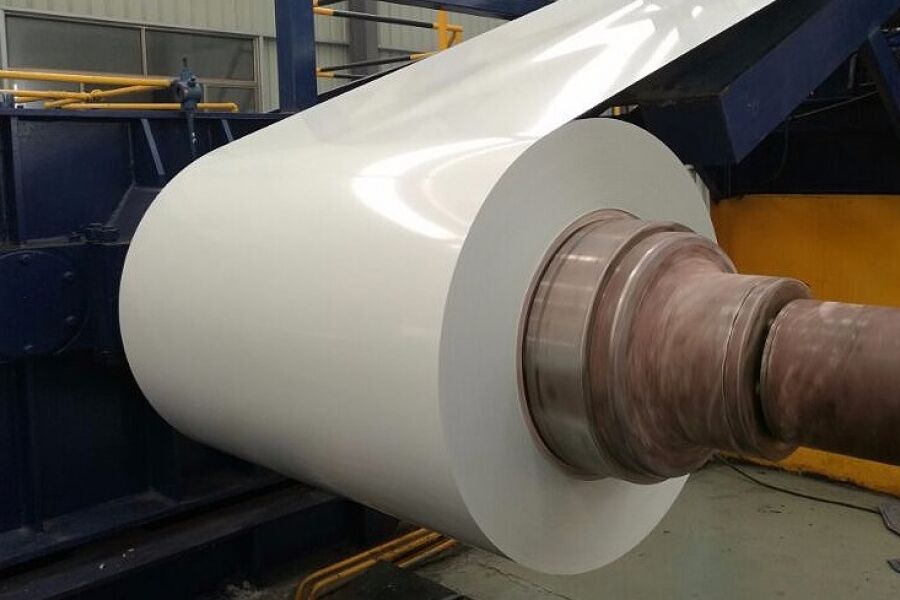
Cold-rolled steel sheets feature a smooth surface and excellent formability. They are utilized in the manufacturing of automobiles, household appliances (such as refrigerators and washing machines), industrial equipment, and various construction materials. With economic development, cold-rolled steel sheets have become an essential material in modern society. Categories of cold-rolled products include: hot-rolled pickled steel, full-hard coils, standard cold-rolled steel, galvanized steel (electro-galvanized, anti-fingerprint, and hot-dip galvanized), galvalume (aluminum-zinc alloy coated), tin-plated steel, color-coated steel, and electrical steel (silicon steel sheets).
1. Hot-rolled pickled steel:
2. Full-hard coils: Produced by subjecting hot-rolled pickled coils to continuous rolling at room temperature.
Product characteristics: Because they have not undergone an annealing process, these coils possess very high hardness (HRB > 90) and extremely poor machinability. They are suitable only for simple, directional bending operations of less than 90 degrees (performed perpendicular to the coiling direction).
Recommended for You
Online Consultation