

‹
›
‹
›
Key Characteristics of Aluminum-Magnesium-Manganese Alloys
1. Lightweight: Aluminum has a density of 2.71 g/cm³, which is only one-third that of steel.
2. High Strength: High strength levels can be achieved through specific alloy composition, processing, and heat treatment. 3. Corrosion Resistance: It possesses an inherent anti-rust capability; the oxide layer that forms on the surface prevents further oxidation and corrosion, and it offers good resistance to acids and alkalis. 4. Versatile and Attractive Surface Finishes: It can undergo various treatments, including anodizing, electrophoresis, chemical processing, polishing, and painting. 5. High Plasticity and Ease of Processing. 6. Good Electrical Conductivity: It is non-magnetic and has low sensitivity to electrical sparks, which helps prevent electromagnetic interference and reduces flammability in specialized environments. 7. Ease of Installation: Aluminum components can be joined using various methods, such as riveting, welding, or adhesive bonding. 8. Environmentally Friendly: It is 100% recyclable.
II. Differences Between Aluminum-Magnesium-Manganese Panels and Color-Coated Steel Panels
Overview of Lituo’s Production Capabilities
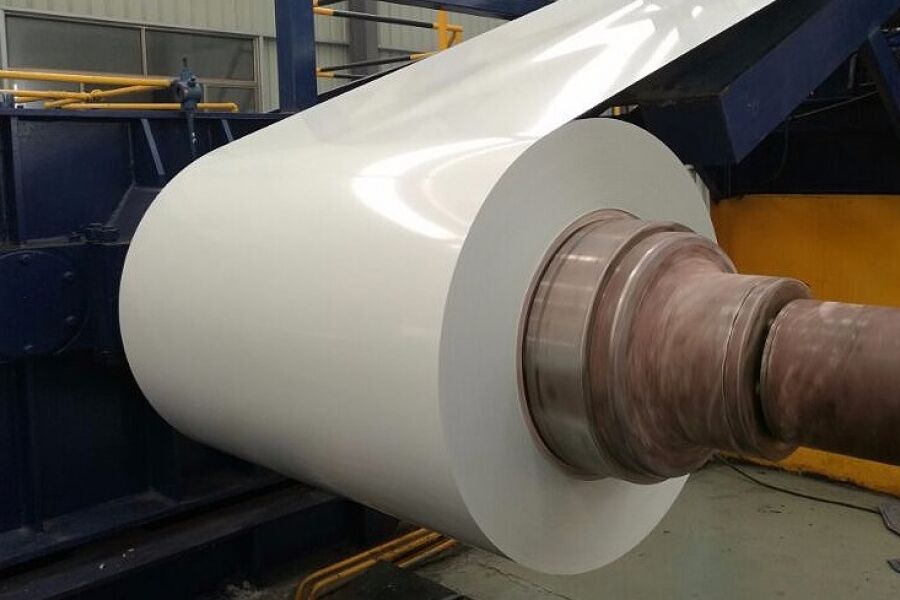
Technological Expertise: As one of the early domestic pioneers in the roll-coating of aluminum coils, the company has continuously refined its processes and driven ongoing technological innovation.
Raw Materials: We utilize high-quality, reliable industry-leading brands. Our coatings are primarily sourced from Nippon Paint and Beckers, while our aluminum substrates are supplied by major producers such as Southwest Aluminum and Chinalco. Product Specifications: We offer a diverse range of products with thicknesses between 0.2 mm and 1.5 mm and widths up to 1,800 mm, with an annual production capacity reaching 100,000 tons.
Key Features of Aluminum-Magnesium-Manganese (Al-Mg-Mn) Products
1. Product Definition: This material serves as a highly cost-effective solution for roofing and exterior wall cladding. Aluminum alloys are widely employed in the construction industry, playing a pivotal role in the evolution of modern architecture toward greater comfort, lightweight design, durability, cost-efficiency, and environmental sustainability. The AA3004 aluminum-magnesium-manganese alloy (AlMg1Mn1)—prized for its balanced structural strength, weather resistance, stain resistance, and ease of bending and welding—is the industry-standard choice for roofing and exterior wall applications designed to last 50 years or more. For projects located in marine climates, we offer the 5052 marine-grade aluminum alloy, which provides superior corrosion resistance.
Physical and Mechanical Properties
Experiments have shown that the acid, alkali and chemical corrosion resistance of fluorocarbon coatings is unmatched by other coatings. The polytetrafluoroethylene coating with a high proportion of fluorine atoms in the resin has the best chemical corrosion resistance among all coatings. It is resistant to all strong acids, strong alkali and strong oxidants. Fluorocarbon coatings for construction can also pass the 3,000-hour neutral salt spray test. Fluorocarbon coatings are used in conjunction with other coatings. Through multi-layer coating, the decorative, heat-insulating, shielding, corrosion-inhibiting and cathodic protection functions of each coating can be used to achieve the purpose of anti-corrosion decoration for the substrate for more than decades.
■Contamination resistance
Fluorocarbon coating has a self-lubricating surface, the contact angle to water is 80 degrees -110 degrees, or even higher, the surface is smooth, and the adhesion is small.
Not easy to be contaminated, even if it is contaminated, it is very easy to clean.
■Temperature resistance
The fluorocarbon coating has very good temperature resistance. The polytetrafluoroethylene coating can be used at -250℃-+250℃ for a long time. The temperature resistance range of other coatings is also extremely wide and can be used at -50℃-150℃.
According to the difference of assimilation temperature, it can be divided into
High temperature curing (above 200℃), medium temperature curing, and normal temperature curing types.
Characteristics of aluminum magnesium manganese system
1. No connection ports, no screw holes, the appearance of the building is complete
2. Can be bent into inner and outer arcs
3. Different materials and colors can be selected
4. Overall structural waterproofing and drainage functions
5. Can be used on roofs with slopes as small as 1.5°
6. Excellent wind pressure resistance (with bottom plate), especially suitable for areas with frequent typhoons and storms
7. Can eliminate the pressure caused by thermal expansion and contraction
8. Simple and fast machine rolling, convenient and economical construction
9. Easy to lay insulation and sound-absorbing layers
10. No chemical caulking glue is required, eliminating pollution and aging problems.
11. The roof does not require maintenance and can be produced on the construction site
Recommended for You
Online Consultation